Off the Wall at the Miami Open: Publix Padel Park
03.16.26
Everything you need to know about padel and PPL II at the Miami Open
Click here to learn more about Publix Padel Park.
As the world of professional tennis continues to evolve, the Miami Open is expanding its footprint beyond the baseline. This year, the tournament welcomes the all-new Pro Padel League (PPL) II to South Florida, introducing fans to one of the fastest-growing sports in the world on one of tennis’s biggest stages.
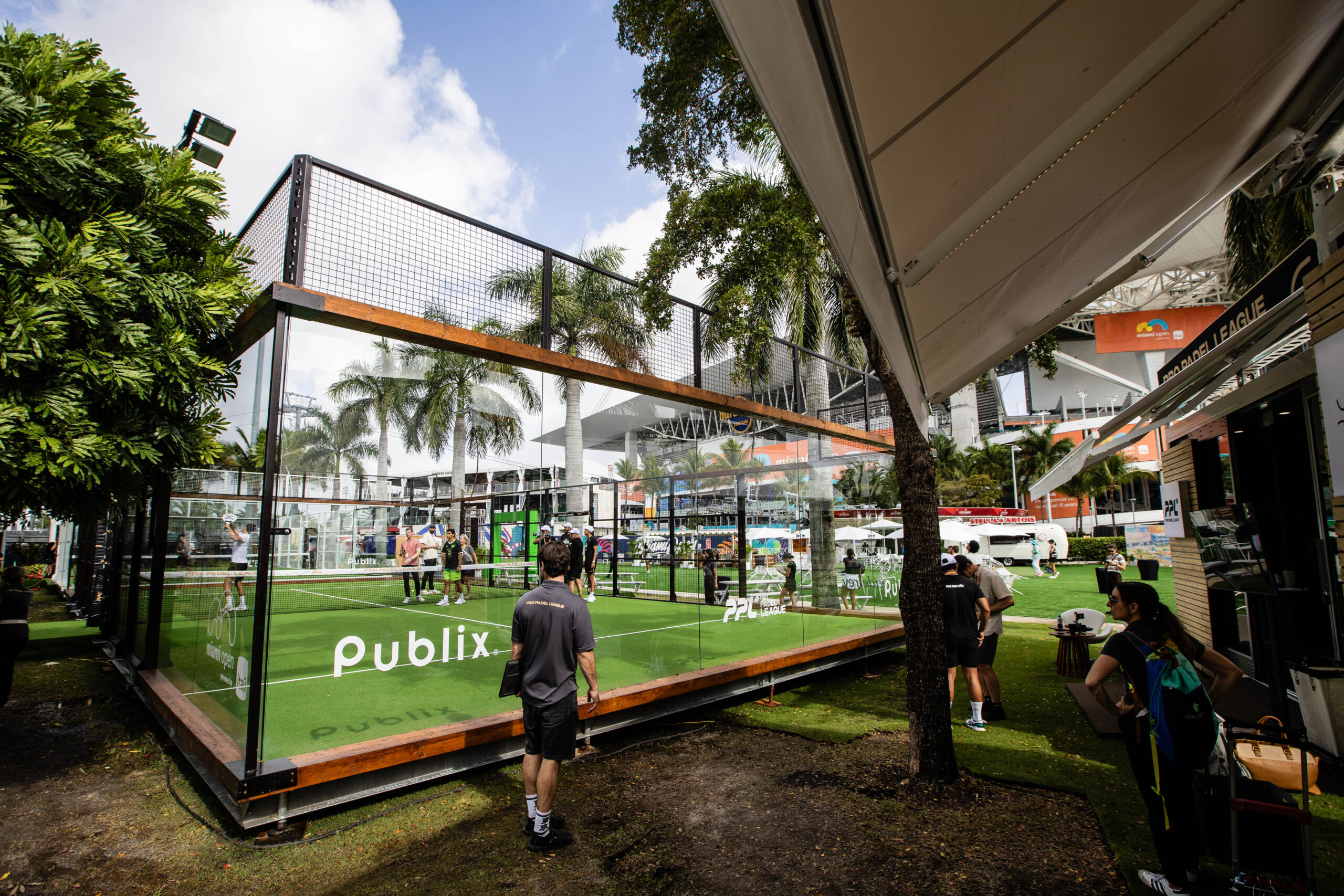
PPL II is a new player‑development initiative created by the Pro Padel League, the world’s leading professional padel league with 10 teams across North America. From March 15-18 at Publix Padel Park at The Paseo, fans can experience padel live during the Miami Open-exclusive tournament.
What exactly is padel? If you’re looking for something that’s not quite as physically demanding as tennis, but not as casual as pickleball, padel sits somewhere in the middle. At first glance, all three sports look familiar: a racket (or paddle), a net, and a court divided in half. In reality, the differences stack higher than the similarities.
Tennis uses stringed rackets and relies on power, with players aiming to hit shots their opponent can’t return. Pickleball borrows elements from badminton and ping‑pong, using solid paddles and a perforated ball on a smaller court to encourage short rallies and social play at the net.
Padel, meanwhile, was born from tennis and squash. It’s played on an enclosed court, using solid, perforated paddles, and the walls are part of the game. Balls can be played off the glass, extending rallies and adding strategy that doesn’t exist in traditional tennis.
All three sports use a point system to determine the ultimate winner, but the way points are earned varies. Pickleball is unique in that only the serving team can score, making it feel closer to ping‑pong than tennis. Tennis and padel share the same scoring structure — love, 15, 30, 40, game — but differ at deuce where both players or teams are tied at 40-40. In tennis, one side must win two consecutive points. In padel, there’s no advantage: the very next point decides the game.
While the technicality and dynamic of the sport may be what draws people in, it is the game-time atmosphere that encourages them to stay. Unlike many leagues that prioritize quiet, formal settings, PPL leans into energy with music, crowd noise, and close‑up viewing encouraged. Fans are right up against the glass, interacting with players, listening to strategy calls and experiencing the speed of the game in real time.
Ready to try it yourself? Head to Publix Padel Park at The Paseo. You can book court time with a professional here or check out the open play schedule updated daily. Whether you’re watching your first match or picking up a paddle for the first time, padel at the 2026 Miami Open moment is designed to meet you where you are.